Is Sagrada Familia Worth Visiting? The Pope Thinks So
Wondering if Sagrada Familia is worth visiting?
I have your answer.
I’ve visited Sagrada Familia more times than I can count: early mornings, late afternoons, with crowds, without, with a ticket that included the towers and with one that didn’t. I know what’s worth checking out and what wastes your time.
So, is Sagrada Familia worth it?
Here’s everything you need to know: tickets, towers, tips, and my honest opinion.
Let’s dive in!
Disclaimer: This page contains affiliate links. If you purchase through one of them, I may receive a small commission from the platform at no extra cost to you. Thanks for the support!
Why Is Sagrada Familia Worth Visiting?

In June 2026, Pope Leo XIV flew to Barcelona, led Mass inside the basilica, and personally blessed the newly completed Tower of Jesus Christ.
One hundred years after Antoni Gaudí’s death, the world’s greatest unfinished building finally has its crown.
Visiting Sagrada Familia feels different from touring other famous buildings in Barcelona.
You’re not just looking at a church. You’re standing inside a building that has been under construction for over 140 years.
Nothing inside is random.
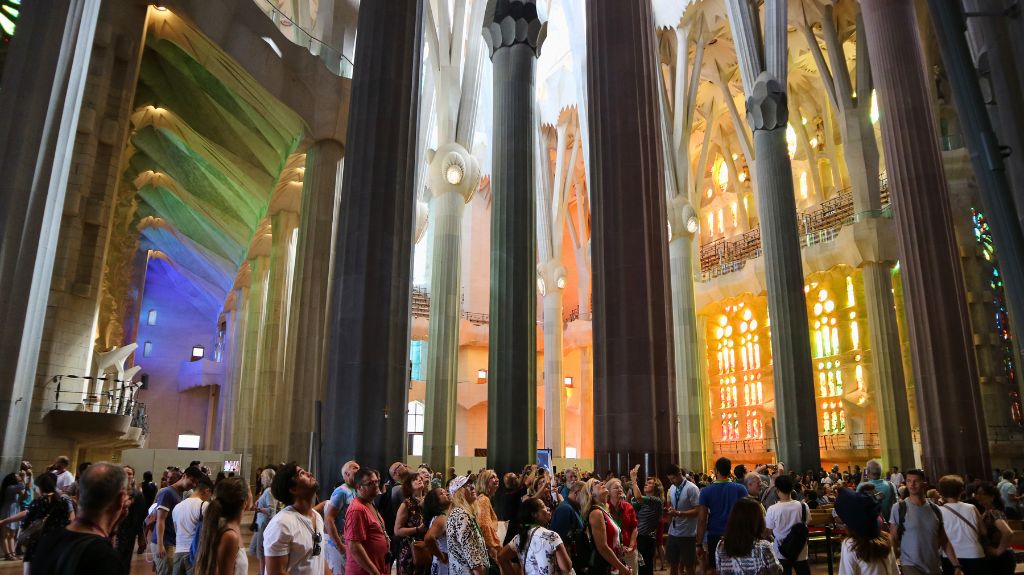
Gaudí drew inspiration from nature for everything. Columns branch like trees, ceilings filter light like a forest canopy, and stained glass floods the nave in deep blues and warm ambers depending on the side and time of day you visit.
The façades tell three completely different stories.
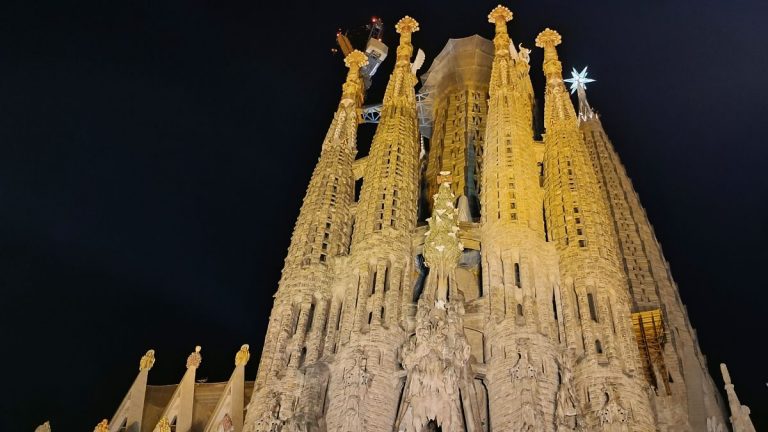
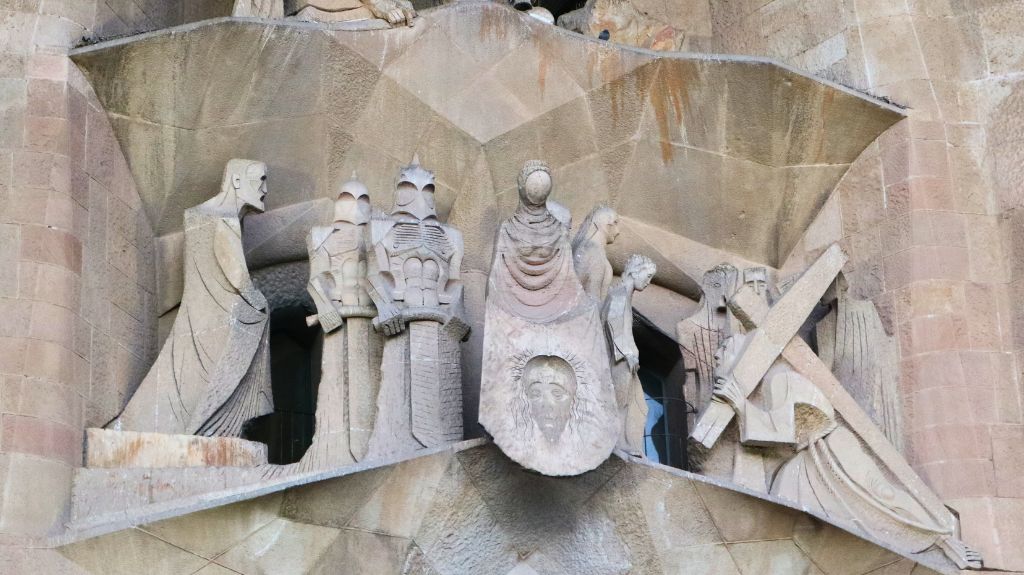
The Nativity side is joyful and covered in organic detail. The Passion side is stark and geometric, almost brutal. The Glory Façade (still being built) will one day be the grandest entrance to a church.
And then there are the towers.
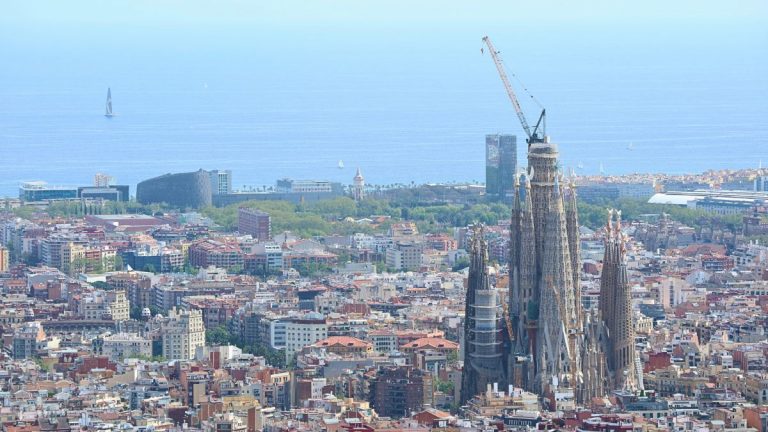
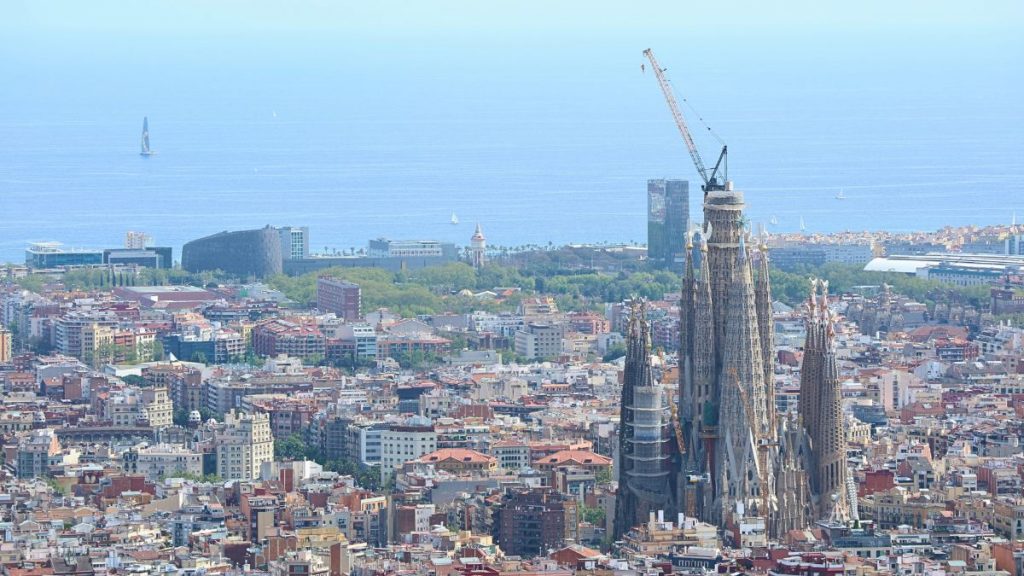
Two are currently open to visitors and give you views over Eixample that you simply cannot get anywhere else in the city. A third, the Tower of Jesus Christ, the tallest church tower in the world, is expected to open its viewing platform in 2027.
If you care about architecture, history, art, or unforgettable experiences, Sagrada Familia belongs on your custom Barcelona itinerary.
Why You Might Want to Skip It
As unmissable as Sagrada Familia is, the visit is not for everyone.
The biggest issue is the crowds.
Nearly 5 million people visited in 2025, and the basilica is a timed-entry site. This helps, but doesn’t eliminate the problem.
Inside, the nave fills up quickly, especially during peak hours. If you’re hoping for a quiet, contemplative moment in a church, this is not it.
Photography is difficult, too.
Clean shots of the interior without strangers in the frame require either very early entry or a lot of patience. The most photogenic spots, like the central nave, the stained-glass windows, and the apse, are exactly where everyone stops and stands.
I’ll be honest: my first visit wasn’t perfect. The crowds made it hard to enjoy the interior at my own pace, and the staff that day were focused on moving people along rather than creating a good experience.
The ticket price is worth thinking about, too.
The basic entry is €26, and if you want to go up the towers or join a tour, the cost climbs fast. For a family or a traveler already working through several paid Gaudí buildings in Barcelona, that adds up quickly.
And if your time in Barcelona is short, consider this: the visit takes at least 1.5 to 2 hours, even at a comfortable pace. With travel time and queues factored in, it can easily take up half a day.
If your budget or schedule is tight, you can still see a lot for free.
The exterior is extraordinary and costs nothing. Walking around the block slowly, stopping at each façade, taking in every scene and detail, is one of the most rewarding free things to do in Barcelona.
What Makes Sagrada Familia Unique?

Want to fit the best of Barcelona into your trip without spending hours planning? I’ll build you a day-by-day itinerary around your interests, dates, and pace. No tourist traps, no wasted time.
Most travelers book a 2-3 day plan for €220-€330. 👉 Plan My Barcelona Trip
Sagrada Familia is not the biggest church in the world. It’s not the oldest, and until several months ago, it wasn’t the tallest.
What makes it unique is something harder to define: the feeling that every stone was placed with a purpose that goes beyond architecture.
Gaudí designed a building that works like a Bible.
Every surface, every tower, every shaft of colored light tells part of the same story. Here’s what that looks like when you’re inside.
A Church 140+ Years in the Making
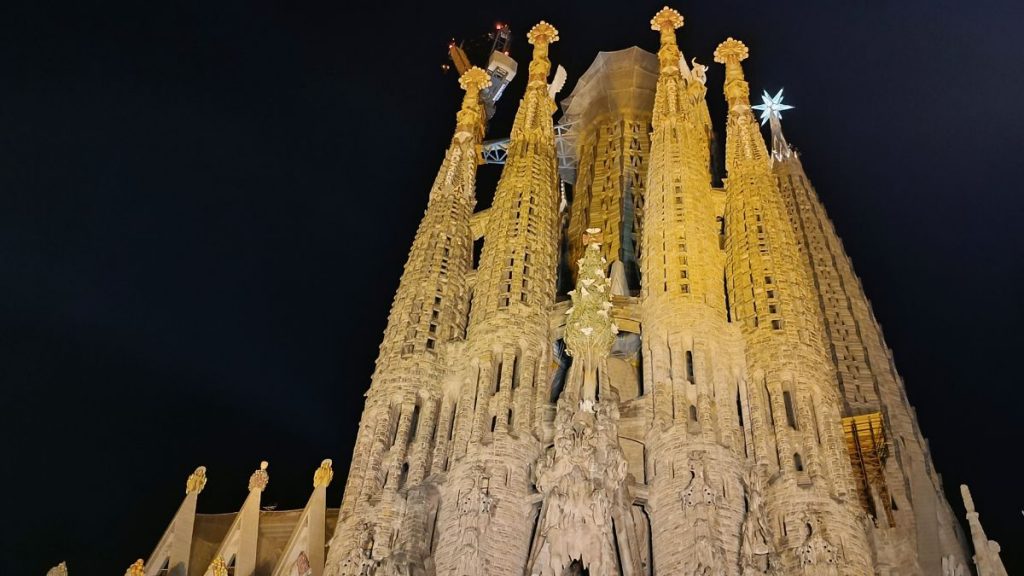
Construction began in 1882. Gaudí took over the project the next year and spent the rest of his life on it, eventually moving into the crypt to be closer to his work.
When he was killed by a tram in 1926, the basilica was roughly 25% complete.
What followed was a century of wars, fires, funding crises, and reconstruction from destroyed plans.
The Spanish Civil War nearly ended the project when anarchists burned Gaudí’s workshop and models in 1936. His collaborators spent years piecing together what survived.
So, the fact that you can walk inside today, under a completed central tower blessed by the Pope days ago, is nothing short of extraordinary!
The Three Façades That Tell One Story
Most churches have one main entrance.
Sagrada Familia has three façades, each facing a different direction, each designed in a completely different visual language, and each dedicated to a different chapter of Christ’s life: birth, death, and glory.
Gaudí intended them to be read together, as a single theological narrative wrapped around the building.
Standing at street level and rotating slowly from east to west, you can feel the shift in mood, from warmth and abundance to austerity and grief.
The third façade, facing south, is still being built and will take another decade (at least) to complete. That tension between the finished and the unfinished is part of what makes the building so alive.
The Nativity Façade: Gaudí’s Only Finished Work

This is the façade Gaudí himself oversaw, and it shows.
Every centimeter is covered in sculptural detail. Plants, animals, angels, and figures from the Nativity story are layered over each other in a way that rewards close looking.
The stone drips with life.
Four tall spires rise above it, representing the apostles Barnabas, Simon, Thaddeus, and Matthew.
The façade faces east, which means morning light hits it directly. This is the best time to see it in full.
If you only walk around the exterior without going in, make sure you stop here the longest. It’s the most personal part of the building, and the closest thing to seeing Gaudí’s hand at work.
The Nativity Façade and the Crypt were declared a UNESCO World Heritage Site in 2005. They are the only sections Gaudí completed during his lifetime, which is precisely why UNESCO singled them out.
The Passion Façade: Where Beauty Turns Brutal

The west-facing Passion Façade is a deliberate shock after the Nativity side.
Gaudí designed it to convey suffering, and sculptor Josep Maria Subirachs, who took on the work decades after Gaudí’s death, leaned fully into that intention.
The figures are angular, elongated, almost skeletal.
The scenes move in an S-shape from bottom to top, tracing the last hours of Christ’s life from the Last Supper to the burial.
Some visitors find it cold or controversial. Subirachs’ style is nothing like Gaudí’s.
But that contrast is the point. This façade faces the afternoon sun, which hits it with a harder, flatter light that suits its mood perfectly.
The Glory Façade: The One Still Being Born
Your free 5-Day Barcelona Itinerary
Planning alone too overwhelming? Join hundreds of travelers who saved hours of research, avoided tourist traps, and experienced the authentic Barcelona.
The south-facing Glory Façade is Gaudí’s most ambitious design and the one furthest from completion.
When finished (currently estimated around 2035), it will be the basilica’s main entrance, representing the path of the human soul toward God.
For now, what you see is scaffolding, partial structures, and the early bones of something monumental.
Pope Leo XIV entered the basilica through this façade for the inauguration of the Tower of Jesus, marking the first time it functioned as a formal entrance.
An ongoing dispute with residents further complicates construction. The planned grand staircase would require demolishing nearby buildings.
Whatever the outcome, this façade will be the last great chapter of a 150-year story.
The Interior Is the Real Reason You Visit Sagrada Familia

From the outside, Sagrada Familia is dramatic.
From the inside, it’s transcendent.
Gaudí designed the interior to feel like a forest.
Branching columns rise from the floor and spread into the ceiling like a canopy of stone trees, diffusing the structural load the way a trunk disperses weight into roots.
The effect is unlike any cathedral you’ve visited before.
Natural light pours in through 100+ stained glass windows. Deep blues and greens on the west side, warm ambers and reds on the east. The colors shift across the floor and columns throughout the day.
In the early morning, the Nativity side glows. In the afternoon, the Passion side burns.
Come at the right hour, and the light alone is worth the ticket price.
This is not a space you understand from photographs. You have to experience it.
The Crypt: Gaudí’s Final Resting Place
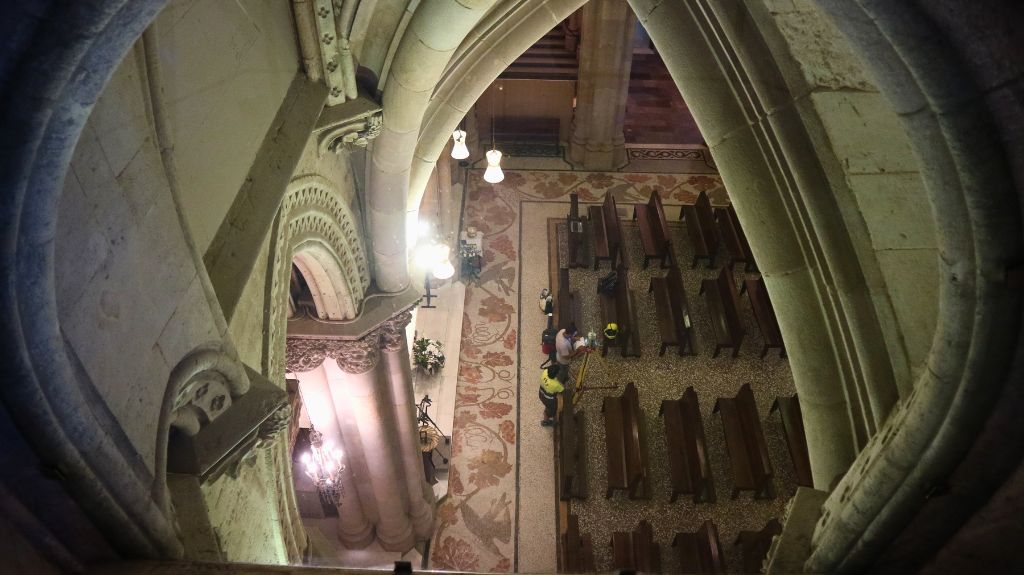
One level below the apse, the Crypt of Sagrada Familia is where Antoni Gaudí is buried.
It was the first part of the basilica to be completed, finished in 1889, and it’s the most serene space in the entire complex.
The architecture is quieter here. Slender columns, Neo-Gothic arches, Roman mosaic floors, and soft light filter through the stained-glass windows.
Four chapels line the space, dedicated to the Virgin of Carmel, Christ, the Virgin of Montserrat, and the Crucified Christ.
Access is included in your entry ticket, and you enter through the Nativity Façade side on Carrer de la Marina. Photography is not permitted inside the crypt.
If you visit during mass, entry is free, and the atmosphere is completely different from the tourist flow above.
Are the Sagrada Familia Towers Worth It?
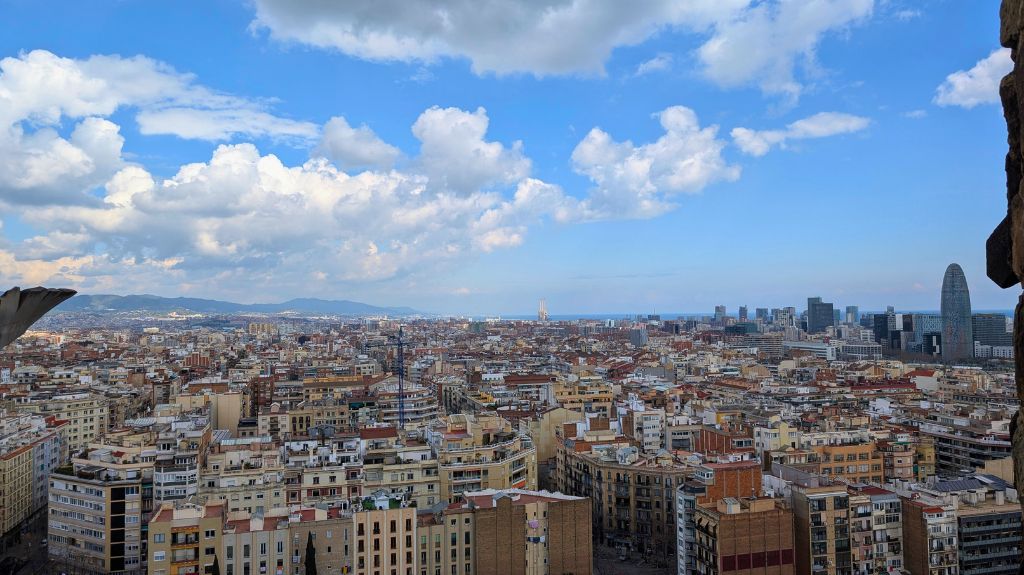
The short answer is yes — but with some context.
There are currently two towers open to visitors: the Nativity Tower and the Passion Tower.
Both require a separate timeslot and offer narrow, winding climbs with elevator assistance.
The views from the top are spectacular: the rooftops of Barcelona in every direction, with the spires of the basilica itself rising around you.
The Nativity Tower looks east toward the sea, while the Passion Tower is facing west toward the city.
If you’re visiting for the first time and photography matters to you, the tower upgrade is worth it.
The Tower of Jesus Christ, now the world’s tallest church tower at 172.5 meters, recently inaugurated by Pope Leo XIV, is not yet open to visitors.
Its public viewing platform is expected to open in 2027. When it does, it will offer the highest publicly accessible viewpoint in Barcelona.
Sagrada Familia Tickets: All Your Options

Buying the wrong ticket, or worse, not buying one at all, is the most common mistake first-time visitors to Barcelona make.
2026 is the busiest year in the basilica’s history, with visitor numbers projected to reach 7 million following the inauguration of the Tower of Jesus Christ.
Here’s exactly what you need to know before you book.
| Ticket | Price |
| Basic Entry | €26 |
| Basic Entry + Guided Tour | €30 |
| Basic Entry + Tower Access | €36 |
| Basic Entry + Guided Tour + Tower Access | €40 |
Do You Need to Book Sagrada Familia in Advance?
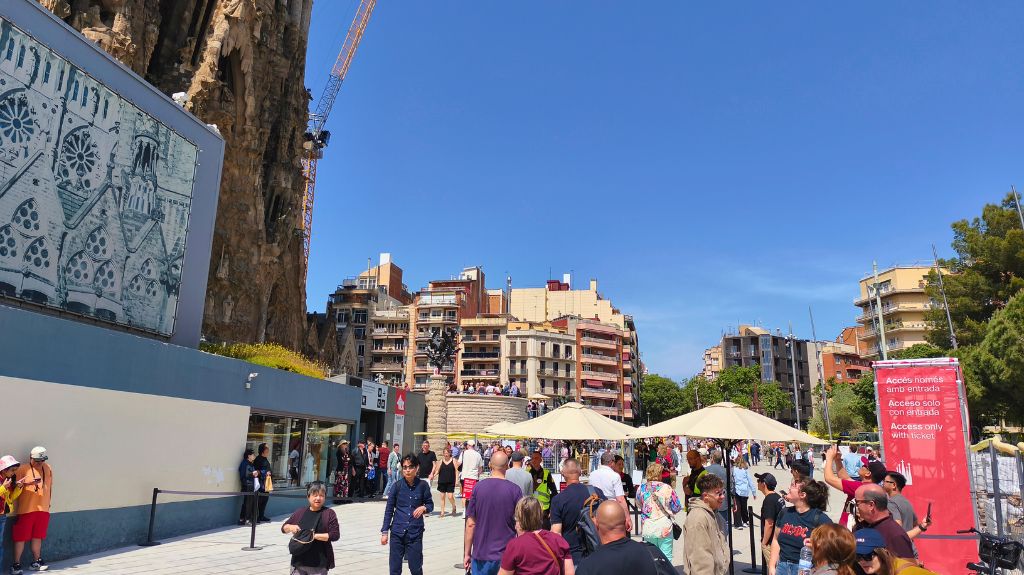
Yes — and in 2026, more than ever.
All tickets are sold exclusively online, and timed-entry slots fill up weeks in advance during peak season.
Same-day availability is a thing of the past.
Unlike at other attractions in Barcelona, like Casa Batlló, there is no physical ticket office at the basilica.
Tickets are also nominative. The name on the ticket must match your photo ID at the door, so you can’t transfer them.
One more thing to be aware of: you must arrive within the 15-minute window printed on your ticket. Late arrivals are turned away with no refund!
So, book early, and be on time.
Basic Entry: What You Get for €26

The standard ticket costs €26 on the official Sagrada Familia website.
The timed ticket gives you access to the full basilica: the nave, the crypt, the apse, the school, and the museum. It includes the official audio guide app, which you download on your phone.
It’s a good option for second-time visitors and budget travelers.
For a first visit, though, I’d recommend adding the towers.
💡 Tip: The ticket sold through the official Sagrada Familia website doesn’t include free cancellation. If you want flexibility, I’d recommend purchasing your entry from GetYourGuide. It costs a few euros extra, but it’ll give you peace of mind, and you’ll be supporting the free content on this website 😊
Entry + Tower Access: Worth the Upgrade?
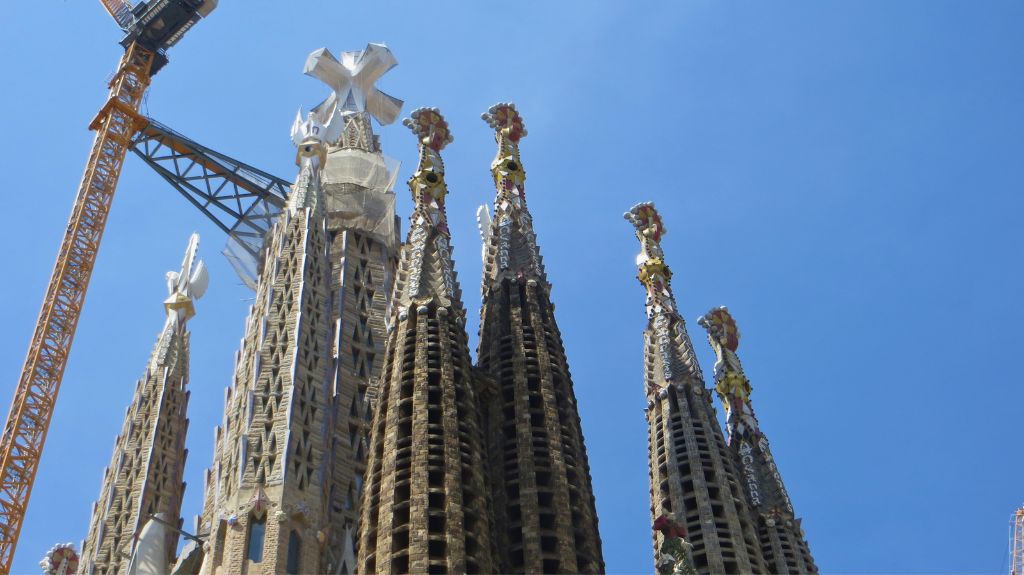
The tower access ticket includes the entry, audio guide, and views from one of the towers.
The ticket costs €36 with an audio guide and €40 with a guided tour.
You can pick to go up either the Nativity Tower or the Passion Tower at the time of booking.
The Nativity Tower faces east toward the sea and is the better choice for morning visits and photography. The Passion Tower looks west over the city and is best in the afternoon light.
Both require a steep staircase descent after the elevator ride up, so wear comfortable shoes.
If it’s your first visit, this upgrade is worth it. The panorama from the towers, with the basilica’s own spires rising around you, is something you won’t find anywhere else in Barcelona.
The Tower of Jesus Christ is not yet open to visitors. Its public viewing platform is expected to open in 2027.
Guided Tour Options: Are They Worth It?
A guided tour costs €30 for a live 50-minute group tour, rising to €40 with tower access included.
For most visitors, I’d say a guided tour is worth it on a first visit. The symbolism packed into every corner of Sagrada Familia is hard to understand without context.
Knowing why the columns branch the way they do, what each façade scene depicts, and what Gaudí intended for the spaces you’re walking through transforms the experience.
If a live guide isn’t for you, the audio app included with the basic ticket does a decent job.
For a deeper dive, GetYourGuide also offers small-group tours that combine Sagrada Familia with Park Güell. It’s a great option if you’re planning to hit both in one day.
It not only includes guided visits to both, but also takes care of transportation between the two most famous UNESCO Sites in Barcelona.
Where and How to Buy Your Tickets
Your free 5-Day Barcelona Itinerary
Planning alone too overwhelming? Join hundreds of travelers who saved hours of research, avoided tourist traps, and experienced the authentic Barcelona.
The safest place to buy is the official Sagrada Familia website, where you pay face value with no booking fee.
However, tickets are non-refundable.
If you want flexibility, booking through GetYourGuide includes free cancellation up to 48 hours before your visit. It’s worth the small premium if your plans might change.
Avoid third-party resellers. Tickets are nominative and non-transferable, which means a resold ticket is a useless one.
If you find the official site sold out for your dates, guided tours and combo tickets through GetYourGuide often have more availability, even during peak season.
How to Get to Sagrada Familia
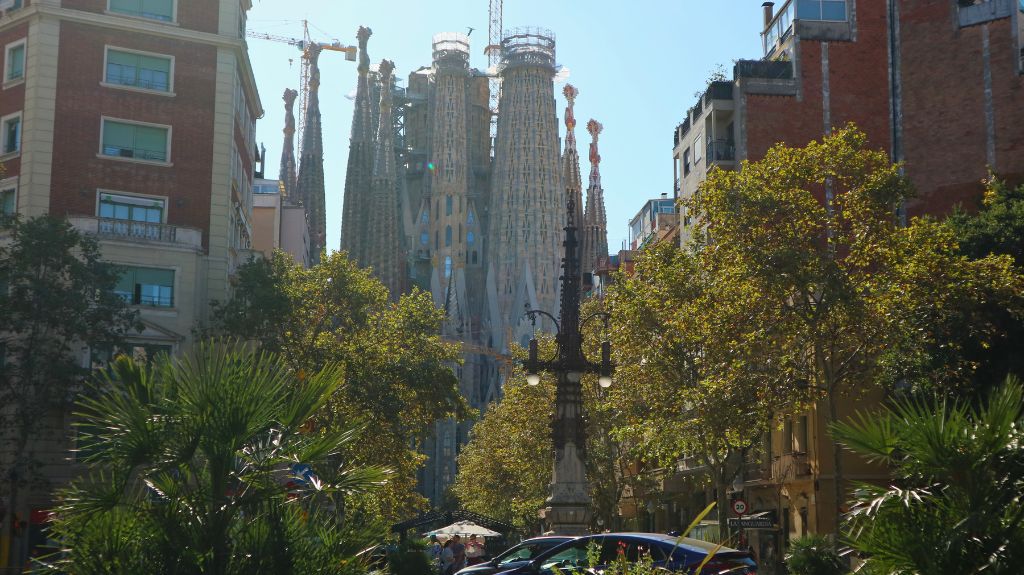
Sagrada Familia sits in the Eixample district, roughly in the center of Barcelona’s famous grid.
It’s one of the easiest major landmarks in the city to reach, with several good options depending on where you’re staying.
By Metro: The Easiest Option
The metro is the fastest and most straightforward way to get there.
Take Line 2 (purple) or Line 5 (blue) to Sagrada Família station. Both lines stop directly underneath the basilica, and the exit puts you at street level, facing the Nativity Façade.
A single metro ticket costs €2.90, or you can use a T-Casual card (10 trips for €13). It’s worth buying if you’re spending more than two days in the city.
The journey from the city center takes around 10 minutes from Passeig de Gràcia and about 15 minutes from the Gothic Quarter.
This is the option I recommend: no traffic, no detours, no guesswork.
On Foot: If You’re Staying Nearby
If you’re based near Sagarada Familia, in Dreta de l’Eixample, or in Gràcia, walking to the basilica is a great option.
The neighborhood grid is easy to navigate, and the towers are visible from several blocks away. You’re unlikely to get lost, and stumbling upon hidden gems in Barcelona is guaranteed.
From Passeig de Gràcia, the walk takes about 20 minutes. From the Gothic Quarter, budget around 35 to 40 minutes.
The walk along Avinguda de Gaudí, which connects Recinte Modernista de Sant Pau to the basilica, is one of my favorite approaches to Sagrada Familia. It frames the towers beautifully as you get closer and builds anticipation.
By Public or Hop-On Hop-Off Bus
Several city bus lines stop near Sagrada Familia, including Bus #19, 33, 34, D50, and H10.
It’s a good option, but slower than the metro. I’d avoid it during peak hours when Eixample traffic can be unpredictable.
The hop-on hop-off tourist buses also stop here.
They’re a convenient option if you’re combining Sagrada Familia with other major landmarks in a single day.
That said, the tour bus is only worth it if you’re planning to use it across multiple stops. For Sagrada Familia alone, the metro is faster and cheaper.
💡 Tip: If you’re arriving by taxi or rideshare, ask to be dropped on Carrer de la Marina for the Nativity Façade or Carrer de Sardenya for the Passion Façade side.
Tips for Visiting Sagrada Familia

💡 Book your ticket the moment you know your dates. In 2026, slots disappear faster than any other year. The inauguration of the Tower of Jesus Christ has pushed interest to record levels. Don’t leave it until a few days before and assume something will be available.
💡 Arrive at your exact entry time, not before and not after. The 15-minute window on your ticket is enforced strictly, and late arrivals are turned away without a refund. Build in buffer time if you’re coming by bus or on foot.
💡 Visit the Nativity Façade in the morning and the Passion Façade in the afternoon. The Nativity side faces east and catches the best light early in the day. The Passion side faces west and is most dramatic in the late afternoon sun. If you can only visit once, time your arrival for the morning and walk around the exterior before heading inside.
💡 Don’t skip the Crypt. Most visitors walk past it entirely. It’s the quietest, most intimate space in the basilica. It is where Gaudí is buried, and it’s included in your ticket.
💡 Download the audio guide app before you arrive, not when you’re already inside. The signal inside the basilica is unreliable, and the app is large. Download it at your hotel the night before so you’re not fumbling with your phone at the entrance while your 15-minute window ticks down.
💡 Wear comfortable shoes if you’re adding tower access. The elevator takes you up, but the descent is on foot via a narrow, winding staircase. It’s not difficult, but it’s not something you want to do in sandals or dress shoes.
💡 Step across the street for the best exterior photos. The basilica fills the block so completely that it’s hard to frame from the pavement directly in front. Cross to the opposite side of the street or walk to the small park on Plaça de Gaudí behind the Nativity Façade. From there, you’ll get a proper full view with the reflection in the pool in the foreground.
FAQs about Visiting Sagrada Familia
Your free 5-Day Barcelona Itinerary
Planning alone too overwhelming? Join hundreds of travelers who saved hours of research, avoided tourist traps, and experienced the authentic Barcelona.
How long does a visit to Sagrada Familia take?
Plan for a minimum of 1.5 hours for basic entry, and around 2.5 if you’re adding tower access, a guided tour, or time in the museum and the crypt. Most visitors underestimate how much there is to see inside Sagrada Familia.
What is the best time to visit Sagrada Familia?
First thing in the morning, as close to opening time as possible. The basilica opens at 9 AM Monday to Saturday and 10:30 AM on Sundays. Early entry means thinner crowds, better light on the Nativity Façade, and a calmer overall experience. Midday is the busiest period by a significant margin, so avoid it if you can. Late afternoon is a good second option, especially if you have tower access on the Passion side, which catches the light before closing time.
What is the Sagrada Familia dress code?
Shoulders must be covered, and shorts or skirts must reach at least mid-thigh. This applies to everyone, regardless of the temperature outside. Hats are not permitted inside the nave, except for religious or medical reasons. Staff at the entrance enforce the dress code and will turn you away if you don’t meet it, without exceptions or refunds. A light scarf or a layer in your bag is the easiest solution if you’re visiting in summer.
Can you visit Sagrada Familia for free?
The exterior is completely free and extraordinary in its own right. Walking slowly around all three façades, Nativity, Passion, and Glory, takes 30 to 45 minutes and costs nothing.
You can also attend Mass inside the basilica for free. Services are held in the Crypt, and the schedule is available on the official Sagrada Familia website.
What does Sagrada Familia mean?
Sagrada Familia is Catalan for Holy Family. It refers to Jesus, Mary, and Joseph. The full official name of the basilica is Temple Expiatori de la Sagrada Familia, which translates as Expiatory Temple of the Holy Family. The word “expiatory” means the building was conceived as a place of atonement, funded entirely by private donations and ticket sales, never by public money.
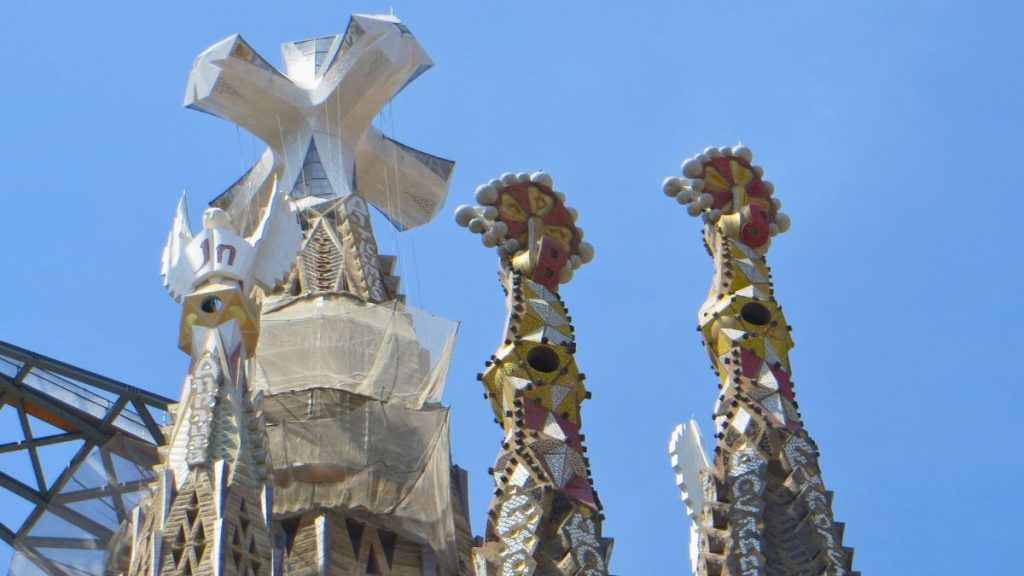
When will Sagrada Familia be completed?
The basilica authorities no longer give an official overall completion date.
The exterior of the tallest Tower of Jesus Christ was completed in February 2026 and blessed by Pope Leo XIV on June 10, 2026. This marked the most significant milestone in the basilica’s 144-year history.
But the most famous Gaudí building is not finished.
Interior work on the Tower of Jesus continues through 2028, with the public viewing platform expected to open in 2027.
The Glory Façade, the grandest and most complex of the three, is estimated to be completed around 2035. Gaudí, when asked about the slow pace of construction, reportedly said: “My client is not in a rush.”
Now You Know: Is Sagrada Familia Worth It?
And there you have it — everything you need to know about visiting Sagrada Familia in 2026.
From the forest-like interior and the three grand façades to the towers that now make it the tallest church in the world, Sagrada Familia is unlike anything else you’ll see in Barcelona (or anywhere else).
Whether you go for the architecture, the history, the stained glass, or simply to stand inside a structure that defies time and space, your visit will be unforgettable.
Book your ticket early, time your visit right, and take your time inside. The most famous church in Barcelona rewards every minute you give it.
Want to fit the best of Barcelona into your trip without spending hours planning? I’ll build you a day-by-day itinerary around your interests, dates, and pace. No tourist traps, no wasted time.
Most travelers book a 2-3 day plan for €220-€330. 👉 Plan My Barcelona Trip